
There are many things to learn about color blindness and a lot of questions which arise when you are confronted with it. But some of the questions seem to be the most essential ones because I get them asked again and again. This page is a résumé of all those questions and shall help you to find the answer to your question more quickly.
FAQ Color Vision Deficiency
- Is there a cure for color blindness?
- Can I correct my color blindness?
- How can I pass the Ishihara test?
- Is my son colorblind?
- Can women also suffer from color vision deficiency?
- Which type of color blindness am I suffering from?
The term color blindness is misleading, because even if you are colorblind you most often can see a lot of colors. The correct wording is actually color vision deficiency; which unfortunately never really made it into common speech.
Is there a cure for color blindness?
Simple and easy you can answer this question without hesitating with no. As of today there is no known treatment which can heal your color blindness.
Color vision deficiency is in most cases a congenital disease based on some corrupted chromosomes. In this case, only some form of gene therapy could give you back normal color vision. At the moment there are some scientists doing experiments with mice, trying to inject them color vision genes and revert their color blindness. But we are still far away from a treatment for humans—if there will be any in the near future at all.
It’s a little bit different with some form of acquired color blindness. Aging, drugs, alcohol, some form of other diseases and even a hard hit on your head can also cause a color vision deficiency. In this case, it could be possible that this state can be reverted. There is also no treatment available. But it is reported, that some persons who were colorblind after a hard hit on their head, regained the ability of normal color vision again after a certain timespan.
There are a few people who claim that Chinese acupuncture can help colorblind people to see and distinguish more colors. I couldn’t find any approve of this and personally I don’t believe, that it works. On the other hand there is a modern colorblind cyborg, who is wearing a camera which transforms color informations into sounds. This makes it possible for him to see colors—still in a very early test stage :-)
The only possibility for colorblind people are some sort of color correcting lenses. They can’t give you back normal color vision but might help you to broaden your perceived color spectrum in certain cases. But also this is no cure for color blindness.
Further reading:
The Way to Cure Color Blindness?
Improving Color Vision with Lenses for the Colorblind
Tritanopic after Head Injury
Can I correct my color blindness?
Many people are looking for a correction of their color blindness. But unfortunately there isn’t any real correction possible.
As any color vision deficiency is either caused by some irregularity in your eyes or your brain, you can’t just put on some glasses or lenses to give you back normal color vision. If you are colorblind you are not able to perceive the same variety of hues, and because of that it is physically impossible that a tool can correct your color blindness.
But there are some lenses and other tools available which claim to improve your color vision. So what can they really do?
Using color correcting lenses means that you buy two differently colored contacts. This causes a shift in your perceived color spectrum which means that you might see some more colors in your problem range but on the other side loose some colors in an other part of the color spectrum. Often color correcting lenses are used to pass some color blindness tests like the Ishihara plate test. It is reported that such lenses might be of some help to perform certain tasks, but many people don’t think they are useful for everyday life.
Further reading:
Improving Color Vision with Lenses for the Colorblind
Seekey – Colorblinds See Otherwise Invisible Colors
How can I pass the Ishihara test?
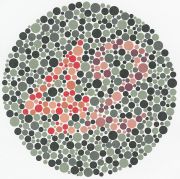
The Ishihara color blindness test is the most often used test to check color vision deficiencies. There are different sets available which are often used for pilot, police officer and other job recruitments, where perfect color vision is a precondition. And because of this rule, many colorblind people are looking for a way to be able to pass such a test.
Unfortunately there isn’t any way to overcome this problem.
You could buy some color correcting contacts. But it is often forbidden to use them for tests.
You could learn the plates by heart. But do you really know, which test set will be used and in which order.
I always suggest not to try to cheat on such tests but to talk about your handicap. Try to find the real reason behind this requirement. Try to show them what you really can see and where your area of problem colors is. Or you can also try to point them out, that Ishihara tests are not realistic color vision tests and that there are better methods available like a lantern color blindness test.
Further reading:
Ishihara Plates Color Blindness Test in a Leaflet
Study on How Color Blindness Affects Pilots
Improving Color Vision with Lenses for the Colorblind
Is my son colorblind?
Many concerned mothers ask me, how they can find out if their two to five year old son is colorblind: “My son can already count and he also knows the letters but fails on naming colors correctly”. Are you in the same situation?
You don’t have to be concerned. The concept of colors is compared to numbers, letters and forms the most complex one. Many children don’t grasp it in the first years, even if they can read numbers and letters. Just try to think about it yourself and all the colors you perceive and name. There are so many different hues which have to be categorized. In my eyes, this is a very complex task to accomplish.
My rule is: Wait until he goes to kindergarten. If he still has a problem with colors you might go and visit an eye specialist. But before that it is to early and it wouldn’t help anybody to know if he really is colorblind or not. As long as you know about the possibility you are on the good side. And don’t be concerned, color blindness as something very common and for most people not really a handicap during their whole life.
Further reading:
Is My Son Colorblind?
Color Blindness Testing Poster for Children
Can women also suffer from color vision deficiency?
Yes. Yes, women can also suffer from any type of color vision deficiency. But because the most common form is red-green color blindness—which is much more prevalent among males—many people think that only men can be colorblind.
Looking at the numbers you have about every twelfth men compared to every 200st women who is colorblind. So you most possibly know a lot more colorblind men before you meet any colorblind woman.
Only forms of red-green color blindness (protan and deutan defects) are encoded on the sex chromosome and occur therefor more often among men. Tritan defects and achromatopsia (complete color blindness) are evenly distributed between men and women. But as those forms are much less common you won’t really recognize it.
Further reading:
Colorblind Population
The Biology behind Red-Green Color Blindness
Chromosomes Involved in Color Blindness
Which type of color blindness am I suffering from?
People often tell me which hues they can’t distinguish and hope to get an answer on the type of their color blindness. Unfortunately I can only guess and can’t really tell them which type it is and how severe it is.
If you want to know it for sure, you have to visit an eye specialist. He should be able to tell you more about your color vision deficiency after some tests. The most common test is some form of Ishihara plates whereas the most accurate tool is the anomaloscope, which can give you the most precise results.
On the other side you can try to take some color blindness tests which are available online and try to find out yourself, which type of color blindness you are suffering from. Check out the links below which will lead you to the different tests available online.
Further reading:
Which Type of Red-Green Color Blindness is It?
Color Blindness Tests
Category: Tests